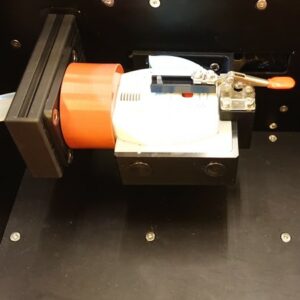
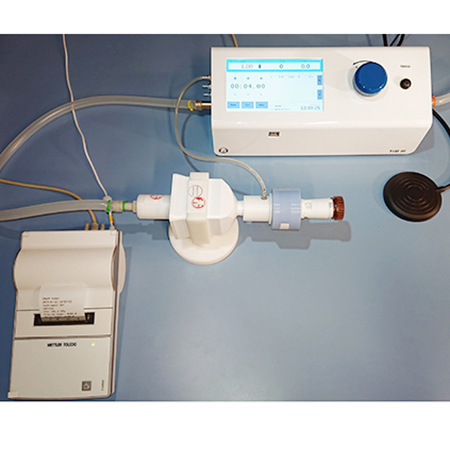
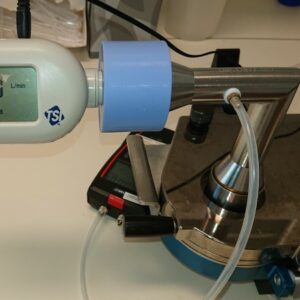
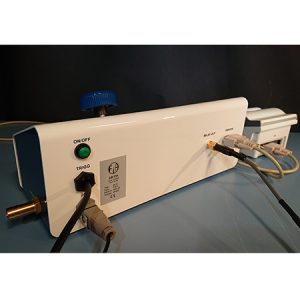
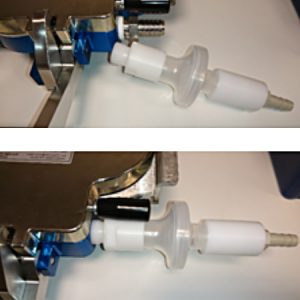
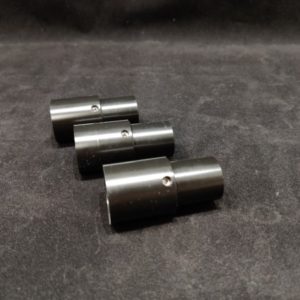
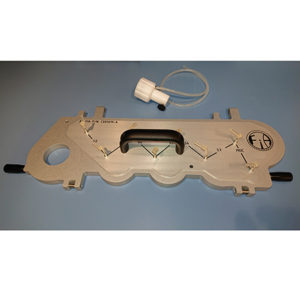
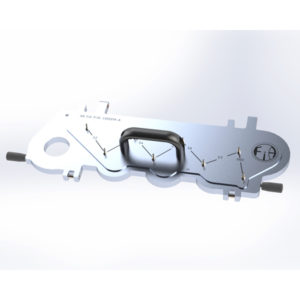
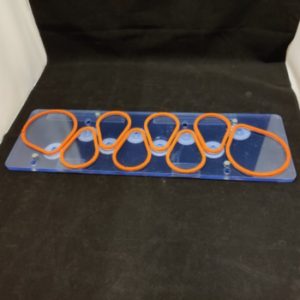
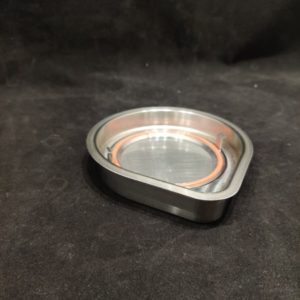
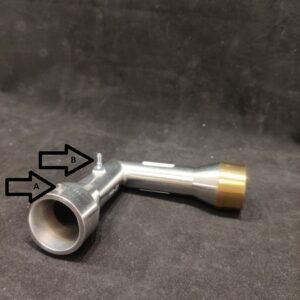
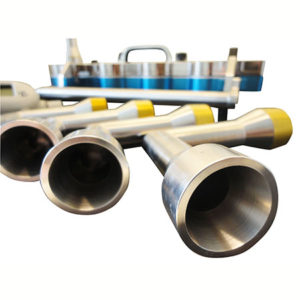
• We offer the service of welding your NGI cups to the NGI tray. Many users find this practical in their everyday handling of the NGI. We have long experience of welding the cups with minimum material change. We inspect the cups before and after the welding to make sure the in-use specifications are upheld. You can send us your own NGI parts or we can take from our internal stock of NGI parts. Depending on the situation, we can agree on various guarantee-commitments.(See the images for further descriptions.)

  • Waste Station Ellipta

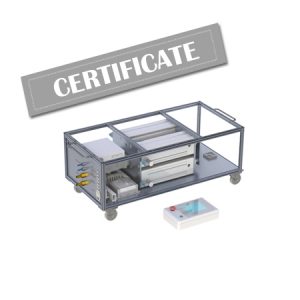
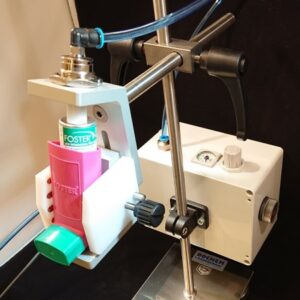
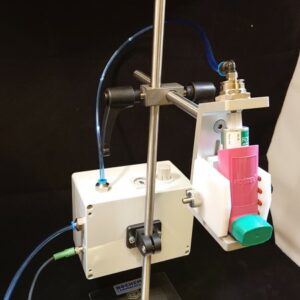
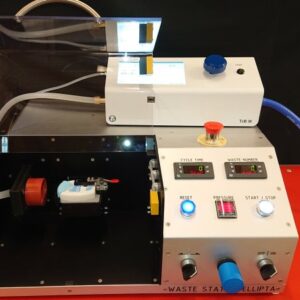
    This is our dedicated waste station for Ellipta. The user puts the Ellipta in a nest and closes a safety cover. The station then automatically mates the inhaler with the mouthpiece adapter, withdraws dose and then reverts. The process is repeated according to a user defined number, with selectable delay-time in between. The doses are collected on a high-capacity filter, with a holding capacity of about 10 g. The disposable filter is then safely and easily replaced. The integration with FIA’s TriggerBox III gives the user full control of the flow process and relevant data recorded on file or printer. Can be equipped with anti-static-device. See here for more information.

  • Waste Collection Station

    Our basic yet efficient and flexible waste collection station. The user loads the dose and inserts the device into a dedicated mouthpiece adapter. The doses are collected on a high-capacity filter, with a holding capacity of about 10 g. The disposable filter is then safely and easily replaced. The integration with FIA’s TriggerBox III gives the user full control of the flow process and relevant data recorded on file or printer. Can be equipped with anti-static-device.

  • Adapter between flowmeter ISO 22 and NGI/ACI induction port.

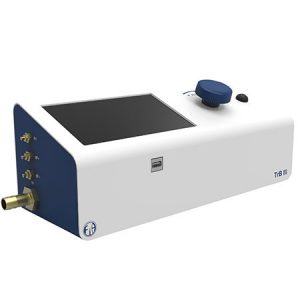
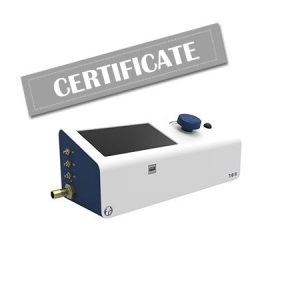
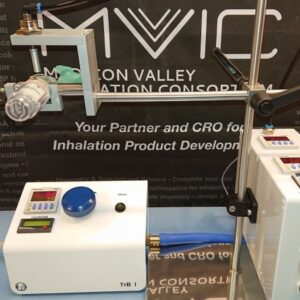
  • TrB III Trigger Box Delta – All-in-One Flow Controller

    The TrB III Trigger Box ensures compliance with standard pharmacopeial methods, both recording and storing key system parameters, including the actual flow rate and run duration. Many inhaler test methods rely on critical flow conditions across the flow control valve, aiming to ensure the same flow rate on each test. But the TrB III does more – actually measures the flow of each test – so, there are no assumptions.

    A calibrated laminar flow element (LFE) internal to each TrB III enables the user to set the flow rate at the beginning of a test sequence; with this LFE, the TrB III then records the flow rate of each test, ensuring against drift, leaks, and other non-ideal behavior that may introduce variability in test results. The TrB III also records the other more traditional run-time parameters, such as the test duration, the pressure drop across the inhaler device (P1), and the flow control pressure ratio (P3/P2, critical flow if ≤ 0.5). The Delta version can measure pressure drop over, e.g., individual impactor stages to detect blockage, using additional internal sensors.1

    Additional user-friendly functions are leak checking and synchronized device actuation by using the integrated output port. Device actuation enables the flow to start simultaneously with dose actuation of a metered-dose inhaler, allowing a user- defined, fixed flow volume for MDI total dose testing.

    Download AB Fia folder Trigger Box TrB III.

    Key features are:

    • Flow actuation: 0-60 min, 0.1s resolution
    • Actuation counter: Resettable 0-999
    • Foot switch: Yes
    • Display: 7” touch
    • P1 measurement: Yes, 0-16 kPa
    • P3/P2 measurement: Yes
    • Flow measurement: Calibrated 0 – 120 l/min (operating range possibly higher)
    • dP (e.g. stage dP): Yes, high precision 0-6 kPa
    • Automatic leak test: Yes
    • Printable data: Prints new actuations continuously or print all actuations from reset.
      • Date/time of first dose
      •  Instrument ID
      • Instrument ver
      • Flow ”on” time
      • External relay timing
      • Atmospheric pressure
      • Dose number
      • P1 and flow
      • P3/P2 (if < 0.5)
      • dP (stage pressure drop)
    • Relay output for actuation of external equipment: Yes, configurable timing of output relative vacuum opening.
    • Displayed history of recent actuation data: All actuations from reset.
    • Interfaces:
      • Relay output for actuation of external equipment
      • Foot switch actuator
      • USB for CSV export
    • Dimensions (cm): 34x13x13

    Download the pdf TrB III – All in one Flow Controller

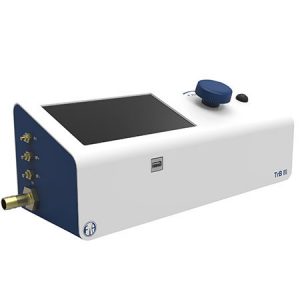
  • TrB III Trigger Box – All-in-One Flow Controller

    The TrB III Trigger Box ensures compliance with standard pharmacopeial methods, both recording and storing key system parameters, including the actual flow rate and run duration. Many inhaler test methods rely on critical flow conditions across the flow control valve, aiming to ensure the same flow rate on each test. But the TrB III does more – actually measures the flow of each test – so, there are no assumptions.

    A calibrated laminar flow element (LFE) internal to each TrB III enables the user to set the flow rate at the beginning of a test sequence; with this LFE, the TrB III then records the flow rate of each test, ensuring against drift, leaks, and other non-ideal behavior that may introduce variability in test results. The TrB III also records the other more traditional run-time parameters, such as the test duration, the pressure drop across the inhaler device (P1), and the flow control pressure ratio (P3/P2, critical flow if ≤ 0.5).1

    Additional user-friendly functions are leak checking and synchronized device actuation by using the integrated output port. Device actuation enables the flow to start simultaneously with dose actuation of a metered-dose inhaler, allowing a user- defined, fixed flow volume for MDI total dose testing.

    Download AB Fia folder Trigger Box TrB III.

    Key features are:

    • Flow actuation: 0-60 min, 0.1s resolution
    • Actuation counter: Resettable 0-999
    • Foot switch: Yes
    • Display: 7” touch
    • P1 measurement: Yes, 0-16 kPa
    • P3/P2 measurement: Yes
    • Flow measurement: Calibrated 0 – 120 l/min (operating range possibly higher)
    • Automatic leak test: Yes
    • Printable data: Prints new actuations continuously or print all actuations from reset.
      • Date/time of first dose
      •  Instrument ID
      • Instrument ver
      • Flow ”on” time
      • External relay timing
      • Atmospheric pressure
      • Dose number
      • P1 and flow
      • P3/P2 (if < 0.5)
    • Relay output for actuation of external equipment: Yes, configurable timing of output relative vacuum opening.
    • Displayed history of recent actuation data: All actuations from reset.
    • Interfaces:
      • Relay output for actuation of external equipment
      • Foot switch actuator
      • USB for CSV export
    • Dimensions (cm): 34x13x13

    Download the pdf TrB III – All in one Flow Controller
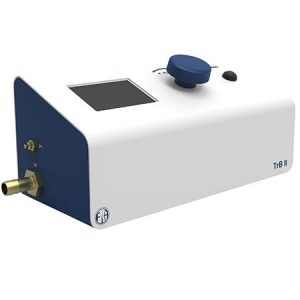
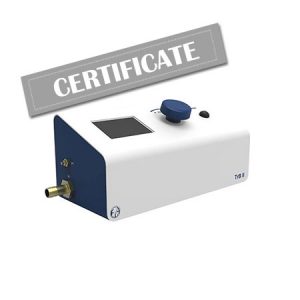
  • Trigger Box Model II – Critical Flow Controller
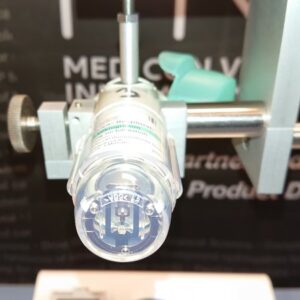
    This model builds on the functions of Model I with the addition of differential pressure transducers for measuring and displaying pressure at P1, P2, and P3.

    Key features are:

    • Flow actuation: 0-60 min, 0.1s resolution
    • Actuation counter: Resettable 0-999
    • Foot switch: Yes
    • Display: 4.3” touch
    • P1 Measurement: Yes, 0-16 kPa
    • P3/P2 Measurement: Yes
    • Flow Measurement: No
    • dP (e.g. stage dP): No
    • Printable data: Prints new actuations continuously
      • Flow ”on” time
      • Dose number
      • P1
      • P3/P2 (if < 0.5)
    • Relay output for actuation of external equipment: No
    • Displayed history of recent actuation data: Last 3 actuations
    • USB memory stick export: No
    • Automatic leak test: No
    • Dimensions (cm): 23x13x13
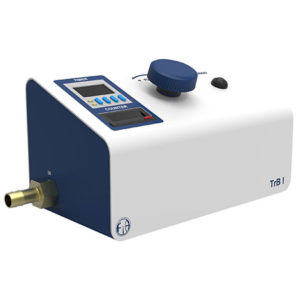
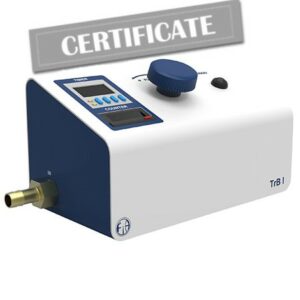
  • Trigger Box Model I – Basic

    This model gives the analyst the basic functionality in a very compact and easily managed format.

    Key features are:

    • Flow actuation: 0-99 min, 0.1s resolution
    • Actuation counter: Resettable, 8 digits
    • Foot switch: Optional
    • Display: 4 and 8 digits
    • P1 Measurement: No
    • P3/P2 Measurement: No
    • Flow Measurement: No
    • dP (e.g. stage dP): No
    • Printable data: No
    • Relay output for actuation of external equipment: No
    • Displayed history of recent actuation data: No
    • USB memory stick export: No
    • Automatic leak test: No
    • Dimensions (cm): 23x13x13
  • Training and IQ Model III. Can be done remote via Skype or on-site. Request preference. The IQ results in a wet-ink protocol. The user gets a license to copyrighted text for e.g. internal maintenance work. Configurable for inhaler actuation. Configurable for camera sync. Configurable for load cell.

  • Can be done remote via Skype or on-site. Request preference. The IQ results in a wet-ink protocol. The user gets a license to copyrighted text for e.g. internal maintenance work.

  • This is our well-proven and appreciated flow controller with a timed shut-off of valve and high-quality regulating valve. See our other range of flow controllers here
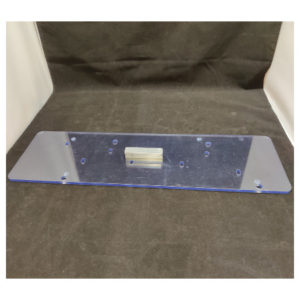
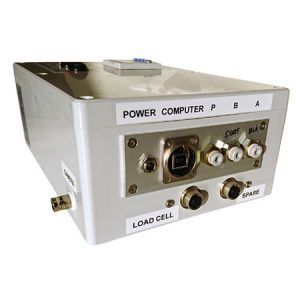
  • Trigger Box - Configurable for inhaler actuation. Configurable for camera sync. Configurable for load cell. Optional output and inputs configurable according to customer needs.
  • Training and IQ Rise Time Equipment Stig. Can be done remote via Skype or on-site. Request preference. The IQ results in a wet-ink protocol. The user gets a license to copyrighted text for e.g. internal maintenance work.

  • Training and IQ Metivent Software. Can be done remote via Skype or on-site. Request preference. The IQ results in a wet-ink protocol. The user gets a license to copyrighted text for e.g. internal maintenance work. Configurable for inhaler actuation. Configurable for camera sync. Configurable for load cell.

  • Training and IQ F-SIG 6300. Can be done remote via Skype or on-site. Request preference. The IQ results in a wet-ink protocol. The user gets a license to copyrighted text for e.g. internal maintenance work.

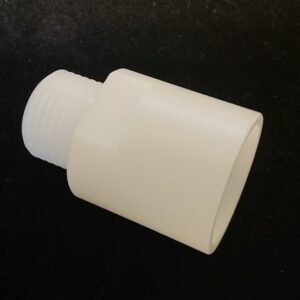
  • Threaded adapter (female) connecting NGI outlet to 25 mm (male) side of a ISO 22 mm standard filter. Recommended to be combined with this product with barbed fitting to connect to vacuum hose.

  • Manage Inhalation Profiles in Clinical Studies with MIDAS The powerful and versatile MIDAS (Manage Inhalation Data Automatically and Securely) is a cGCP compliant software for patient training purposes that can be used to:
    • Streamline recording of thousands of profiles together with the Stig PL instrument
    • Review, compare and perform mathematical operations on the profiles
    • Create comprehensive reports, securely archived alongside the original data
    • In addition, MIDAS can also record in-situ profiles from breath simulators in your lab.

    The Midas provides a powerful means of recording the inhalation profiles of study subjects in clinical trials and making them available for review and reporting.

    The application has been designed to operate in a dedicated IT framework, available from FIA. The scope of the overall system is to record, manage, report and archive data and signed reports in compliance with the highest cGCP standards whilst meeting the ERES requirements of 21 CFR Part 11.

    MIDAS Application is for Everyone!

    Application functionality is defined by user privileges. A user only sees what is relevant and appropriate for their role. Different functions are available in sections organised under tabs, following a workflow from left to right.Midas System setup

    Read more in the pdf AB FIA_MIDAS_2025
  • STIG Pressure Logger (PL) – Measuring Flow Rates through DPIs in Clinical Studies

    Introducing the STIG PL, a GCP compliant device that can be used to:
    • Train subjects how to inhale correctly through DPIs
    • Record the flow/pressure drop profiles that subject generated through the DPIs

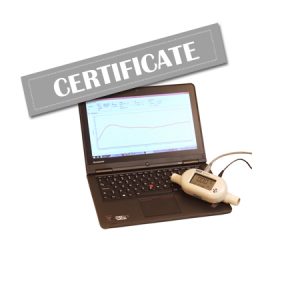
    The STIG Pressure Logger (PL) from AB FIA provides a portable solution to record the inhalation profiles from study subjects in clinical trials in a convenient and secure way. The instrument lends itself particularly well to passive devices such as dry powder inhalers, from low to high resistance with a properly configured STIG PL.

    A typical set up consists of the STIG PL instrument, an inhalation device and a Windows®computer.

    The device is connected to a pressure port on STIG PL with a tube. When the patient inhales through the device STIG PL measures the pressure profile during a set time and saves the profile. The pressure can be mathematically converted to flow.

    To read more download the STIG PL pdf here.
  • The data from STIG PL is pressure (flow) against time and meta data such as date, study number/subject etc. The sampling frequency and duration are configurable upon ordering but typically 100 Hz and 10 s. The measurement data is stored as a CSV file which is transferred to a USB stick inserted into STIG PL. Alternatively directly through a speciality cable to a computer with the PCLink software available from FIA. The latter improves data integrity controls. Instead of a CSV file the data can be directly formated for remote database storage. FIA can assist the customer to set up an appropriate database.

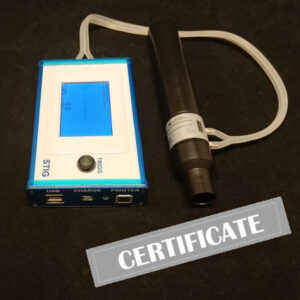
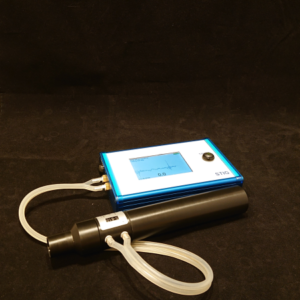
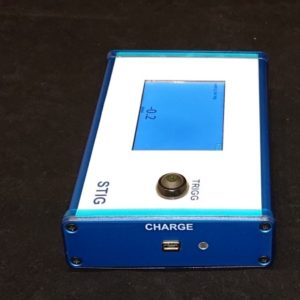
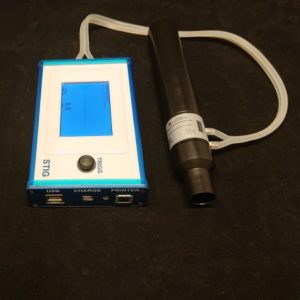
  • This FIA product addresses the dynamics of testing dry-powder inhalers (DPIs). Compendial methods of testing DPIs call for an abrupt start and abrupt end to the air flow. An attribute aimed at representing the way a patient uses a DPI. The starting and stopping of the air flow introduces time-variant conditions in the test equipment (cascade impactor) and in the device itself. Experimental and computational studies of these conditions are continuing to elucidate the important characteristics of the device and test system that should be known and controlled to establish a sound quality control test for products that are or are about to be registered. FIA's latest instrument known as Stig puts in users hands the most important measure of the time-dependent air flow start-up the rise-time. It is important that the rise-time is known and under control when testing inhalable devices. Russell-Graham and colleagues1showed that the fine particle dose increases as the rise time decreases. Previous and subsequent theoretical analyses point out reasons for this effect.2, 3 For established products quality control (QC) testing requires knowing that the rise-time remains in a specified range...now possible with Stig. For GMP QC Stig can be locked to acquire and present the rise-time according to a defined and validated method. Since patients do generate different inhalation air-flow profiles it is also important during the development of a new drug product to adjust the prototype devices to exhibit a sensible rise-time close to what will take place in patient use. This mindset is equally important for DPIs and for breath-actuated MDI devices. Stig also makes possible the recording of air-flow profiles so that they can be reproduced on a breathing simulator (such as F-SIG 6300) for studying nebulizers. Versatile and user-friendly. Best-in-class - that is the new Stig from FIA.

    Key features of Stig Restricted Version:

    • Rise-time measurement 0.1-1 s using a thermal flow meter
    • Average rise-time from a series of measurements
    • Touch-screen which displays a graph of flow vs. time, rise-time and the final flow
    • Battery powered
    • Optional IQ/OQ and quality certificate for the regulated industry

    Download the pdf Rise-time Measurement Instrument Stig

    1. Russell-Graham, D., A. Cooper, B. Stobbs, E. McAulay, H. Bogard, V. Heith, E. Monsallier, "Further Evaluation of the Fast-Screening Impactor for Determining Fine-Particle Fraction of Dry Powder Inhalers, "Drug Delivery to the Lung, December 8 to 10, 2010, Edinburgh, Scotland.
    2. Roberts, D. L., M. Chiruta, "Transient Impactor Behavior during the Testing of Dry-Powder Inhalers via Compendial Methods, "Drug Delivery to the Lung 18, The Aerosol Society, Edinburgh, Scotland, December 13-14, 2007.
    3. Versteeg, H., P. Zhao, C. Blatchford, M. Copley, D. L. Roberts, J. P. Mitchell, "A Computational Fluid Dynamics (CFD) Model of the Start-Up Kinetics of the Andersen Cascade Impactor (ACI), "Drug Delivery to the Lung, Aerosol Society, Edinburgh, Scotland, December 9-11 2015; pages 18-21.
  • This FIA product addresses the dynamics of testing dry-powder inhalers (DPIs). Compendial methods of testing DPIs call for an abrupt start and abrupt end to the air flow. An attribute aimed at representing the way a patient uses a DPI. The starting and stopping of the air flow introduces time-variant conditions in the test equipment (cascade impactor) and in the device itself. Experimental and computational studies of these conditions are continuing to elucidate the important characteristics of the device and test system that should be known and controlled to establish a sound quality control test for products that are or are about to be registered. FIA's latest instrument known as Stig puts in users hands the most important measure of the time-dependent air flow start-up the rise-time. It is important that the rise-time is known and under control when testing inhalable devices. Russell-Graham and colleagues1showed that the fine particle dose increases as the rise time decreases. Previous and subsequent theoretical analyses point out reasons for this effect.2, 3 For established products quality control (QC) testing requires knowing that the rise-time remains in a specified range...now possible with Stig. For GMP QC Stig can be locked to acquire and present the rise-time according to a defined and validated method. Since patients do generate different inhalation air-flow profiles it is also important during the development of a new drug product to adjust the prototype devices to exhibit a sensible rise-time close to what will take place in patient use. This mindset is equally important for DPIs and for breath-actuated MDI devices. Stig also makes possible the recording of air-flow profiles so that they can be reproduced on a breathing simulator (such as F-SIG 6300) for studying nebulizers. Versatile and user-friendly. Best-in-class - that is the new Stig from FIA.

    Key features of Stig:

    • Rise-time measurement 0.1-1 s using a thermal flow meter
    • Average rise-time from a series of measurements
    • Touch-screen which displays a graph of flow vs. time, rise-time and the final flow
    • Printed records of the measurement with optional printer. Has been validated together with Mettler-Toledo printers, customer can use own printers (e.g. from lab balances)
    • Rise-time profile saved to USB-memory
    • Date and time
    • Battery powered
    • Optional IQ/OQ and quality certificate for the regulated industry

    Download the pdf Rise-time Measurement Instrument Stig

    1. Russell-Graham, D., A. Cooper, B. Stobbs, E. McAulay, H. Bogard, V. Heith, E. Monsallier, "Further Evaluation of the Fast-Screening Impactor for Determining Fine-Particle Fraction of Dry Powder Inhalers, "Drug Delivery to the Lung, December 8 to 10, 2010, Edinburgh, Scotland.
    2. Roberts, D. L., M. Chiruta, "Transient Impactor Behavior during the Testing of Dry-Powder Inhalers via Compendial Methods, "Drug Delivery to the Lung 18, The Aerosol Society, Edinburgh, Scotland, December 13-14, 2007.
    3. Versteeg, H., P. Zhao, C. Blatchford, M. Copley, D. L. Roberts, J. P. Mitchell, "A Computational Fluid Dynamics (CFD) Model of the Start-Up Kinetics of the Andersen Cascade Impactor (ACI), "Drug Delivery to the Lung, Aerosol Society, Edinburgh, Scotland, December 9-11 2015; pages 18-21.
  • Rinsing cap for OPC anatomical throat.
    Material: Blue silicone.
  • Rinsing cap for NGI pre-separator inlet.
    Material: Blue silicone.
  • Rinsing cap for NGI induction port inlet (straight).
    Material: Blue silicone.
Go to Top